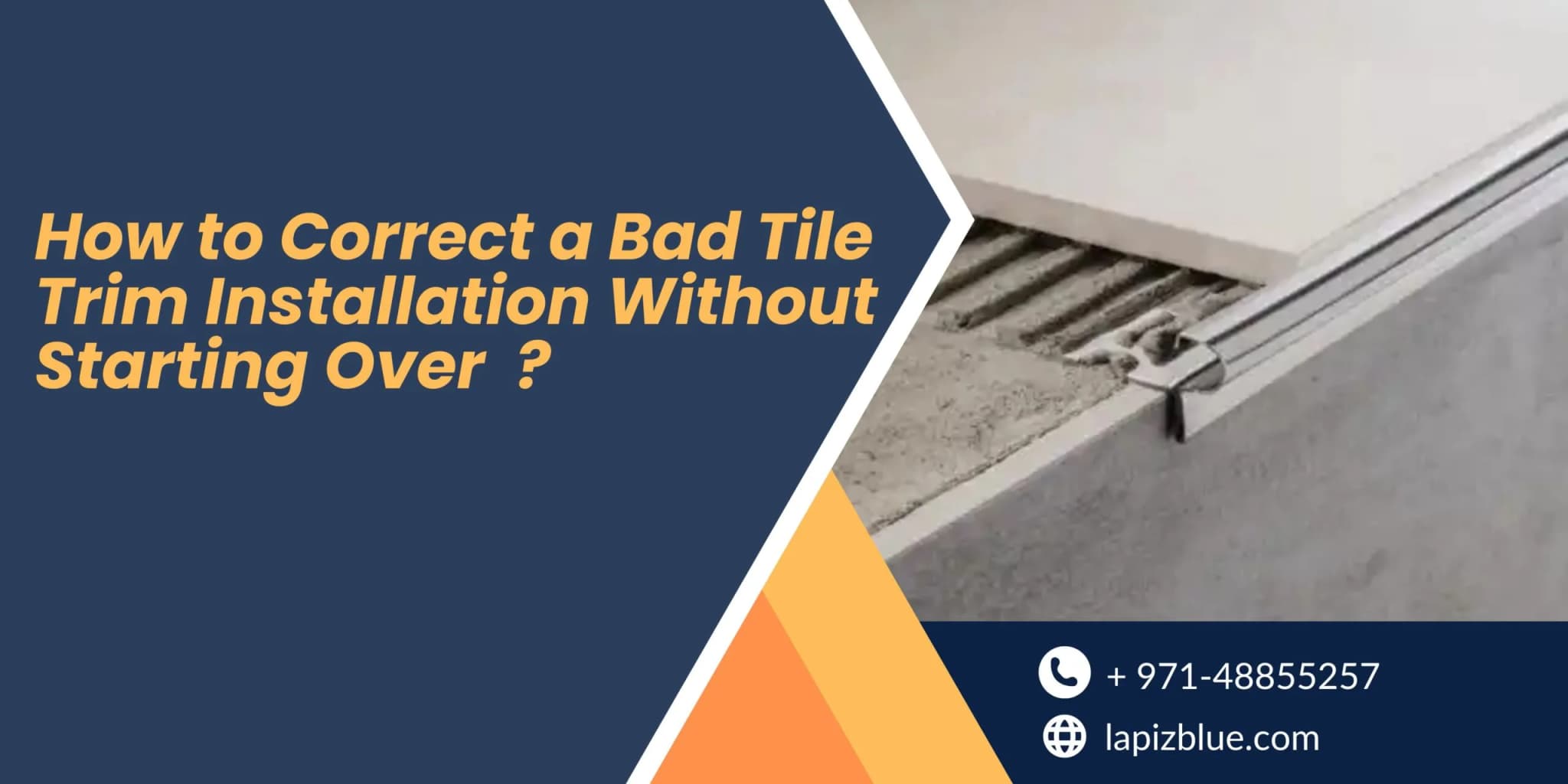
You've finished tiling, stepped back to admire your work, and then - your heart sinks. The tile trim is misaligned, uneven, or worse, gaping from the surface.
How to Correct a Bad Tile Trim Installation Without Starting Over?
You've finished tiling, stepped back to admire your work, and then - your heart sinks. The tile trim is misaligned, uneven, or worse, gaping from the surface. Before you resign yourself to tearing everything out, know that many trim installation problems can be fixed without a complete redo.
Common Problems and Solutions
1. Uneven Trim Height
When trim sits higher or lower than adjacent tiles, the result looks amateur and creates trip hazards.
Causes:
- Incorrect tile thickness calculation
- Uneven adhesive application
- Substrate irregularities
- Wrong profile selection
Solutions:
- Remove excess adhesive carefully if trim is too high
- Add thin layers of adhesive to raise low sections
- Secure with painter's tape while adhesive sets
- Shim as needed before permanent fixing
2. Misaligned or Crooked Trim
Wavy or off-angle trim lines destroy the professional appearance of any installation.
Causes:
- Rushed installation
- Insufficient reference lines
- Movement during adhesive cure
- Flexible trim material
Solutions:
- Heat gun to soften adhesive for repositioning (use carefully)
- Rubber mallet and wooden block for gentle realignment
- Complete removal and reinstallation if severe
- Use straightedge guides during correction
3. Gaps Between Trim and Tile
Visible gaps invite moisture problems and look unfinished.
Causes:
- Undersized profile for tile thickness
- Adhesive shrinkage
- Tile edge irregularities
- Installation sequence errors
Solutions:
- Fill moderate gaps with thinset, feathered smooth
- Use color-matched caulk for smaller gaps
- Consider decorative caulk lines as design feature
- Replace severely gapped sections
4. Trim Sticking Out Too Much
Protruding trim creates hazards and catches attention for wrong reasons.
Causes:
- Wrong profile depth selection
- Excessive adhesive
- Tile thinner than expected
- Installation angle errors
Solutions:
- Carefully grind or file metal trims
- Use hacksaw for major reductions
- Replace with correct profile size
- Consider transition trim alternatives
5. Loose or Weak Adhesion
Trim that moves or makes noise signals adhesion failure.
Causes:
- Inadequate surface preparation
- Wrong adhesive type
- Moisture during cure
- Substrate contamination
Solutions:
- Inject thinset through gaps where possible
- Apply construction adhesive along edges
- Tape securely for 24-48 hours
- Add mechanical fasteners if appropriate
Prevention for Future Projects
Accurate Measurement
- Verify tile thickness before ordering trim
- Account for adhesive bed thickness
- Consider grout joint dimensions
- Order sample profiles to test fit
Proper Adhesive Selection
- Match adhesive to substrate and trim material
- Use enough but not excess adhesive
- Follow open time requirements
- Allow proper cure before traffic
Installation Sequence
- Install trim before or with tiles, not after
- Maintain consistent positioning
- Use spacers for even alignment
- Check level and alignment frequently
Quality Materials
- Invest in quality trim products
- CERFIX Prolist offers premium performance
- Specify appropriate durability levels
- Consider long-term maintenance needs
When to Replace Instead of Fix
Consider full replacement when:
- Multiple problems exist simultaneously
- Structural issues underlie cosmetic problems
- Water damage has occurred
- Correction costs approach replacement costs
- Safety concerns exist
Upgrade Options
If replacement becomes necessary, consider upgrading to Profilpas premium trims:
- Superior material quality
- Better tolerance matching
- Enhanced durability
- Professional appearance
Contact Lapiz Blue for product recommendations and technical support.