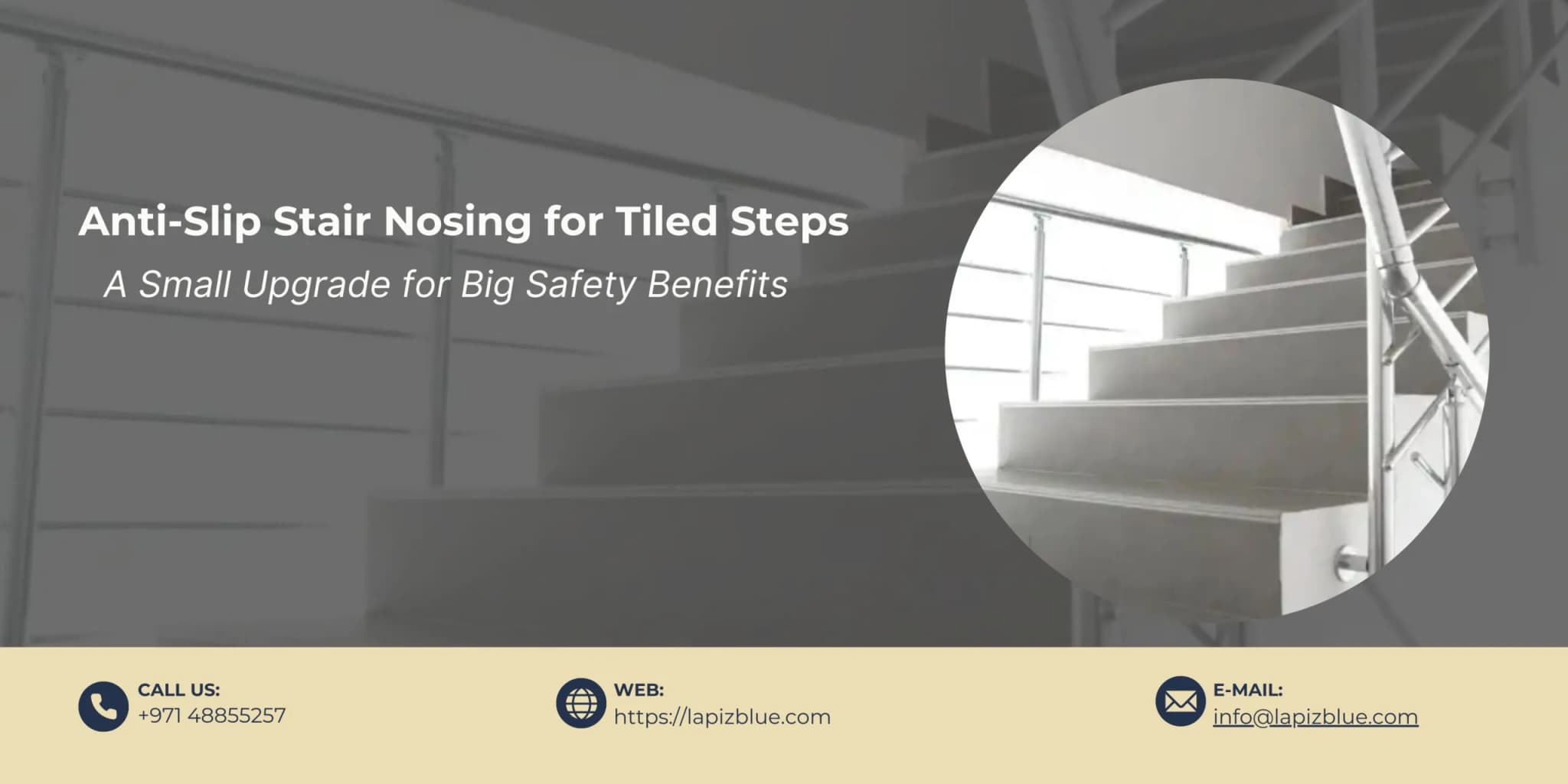
If you've ever felt uneasy walking down tiled stairs, you're not alone. Tiled steps, while stylish and durable, can be notoriously slippery - especially when wet.
Anti-Slip Stair Nosing for Tiled Steps: A Small Upgrade for Big Safety Benefits
If you've ever felt uneasy walking down tiled stairs, you're not alone. Tiled steps, while stylish and durable, can be notoriously slippery - especially when wet. Stair nosing offers a simple, effective solution that combines safety with aesthetic appeal.
Five Reasons to Invest in Stair Nosing
1. Safety Enhancement
Textured surfaces improve traction:
- Anti-slip materials reduce fall risk
- Better grip in wet conditions
- Consistent friction coefficient
- Reliable performance over time
2. Visual Distinction
Defined step edges improve visibility:
- Contrast helps identify stair edges
- Reduces missteps from poor visibility
- Aids those with vision difficulties
- Enhances safety in low light
3. Durability Protection
Nosing shields vulnerable tile edges:
- Buffers against chipping and cracking
- Takes impact instead of tiles
- Extends installation lifespan
- Reduces maintenance costs
4. Aesthetic Options
Modern nosing enhances design:
- Multiple material choices
- Various finish options
- Color coordination possibilities
- Architectural integration
5. Regulatory Compliance
Commercial spaces often require:
- Building code compliance
- Accessibility standards
- Occupational safety requirements
- Liability mitigation
Material Options
Aluminum
Ideal for high-traffic areas:
- Exceptional durability
- Lightweight installation
- Multiple finish options
- Commercial-grade performance
Rubber
Enhanced grip for residential:
- Superior traction
- Comfortable underfoot
- Quieter than metal
- Shock absorption
PVC
Affordable versatility:
- Indoor and outdoor options
- Color variety
- Easy installation
- Budget-friendly
Glow-in-the-Dark
Low-light visibility:
- Emergency illumination
- Power outage safety
- Continuous visibility
- Modern technology
Installation Guide
Step 1: Measurement
Measure each stair accurately:
- Tread width
- Nosing projection needs
- Multiple stair variations
- Material quantities
Step 2: Cutting
Prepare nosing sections:
- Precision cuts for fit
- Proper tools for material type
- Clean, square edges
- Account for overlaps
Step 3: Surface Cleaning
Prepare adhesion surfaces:
- Remove dust and debris
- Clean oils and residues
- Allow complete drying
- Verify surface condition
Step 4: Adhesive Application
Apply bonding agents:
- Use recommended adhesives
- Adequate coverage
- Even distribution
- Proper open time
Step 5: Curing
Allow proper setting:
- Follow cure time specifications
- Avoid traffic during cure
- Temperature considerations
- Moisture protection
Maintenance Tips
Regular Cleaning
- Sweep debris regularly
- Mop with mild cleaners
- Address spills promptly
- Maintain slip resistance
Periodic Inspection
- Check for wear patterns
- Verify secure attachment
- Look for damage
- Plan replacements proactively
Premium Options from Profilpas
Profilpas offers professional stair nosing solutions:
- Cerfix Proangle series
- Multiple material choices
- Various finish options
- Commercial-grade durability
Available through Lapizblue throughout the UAE. Contact us for product recommendations and pricing.