Professional Tile Spacers for Consistent Grout Lines
Consistent grout joints separate professional tile installations from amateur work. Peygran spacers maintain precise spacing throughout floors and walls, ensuring grout lines remain uniform from corner to corner. The Multi Series 4X spacers, X-crosses, and T-wedges accommodate various installation patterns and tile configurations. Spanish manufacturing quality means spacers that hold their shape under pressure and remove cleanly when grouting begins. For contractors who understand that details define quality, Peygran spacers deliver the precision that elevates every installation.
Visit Peygran Official Website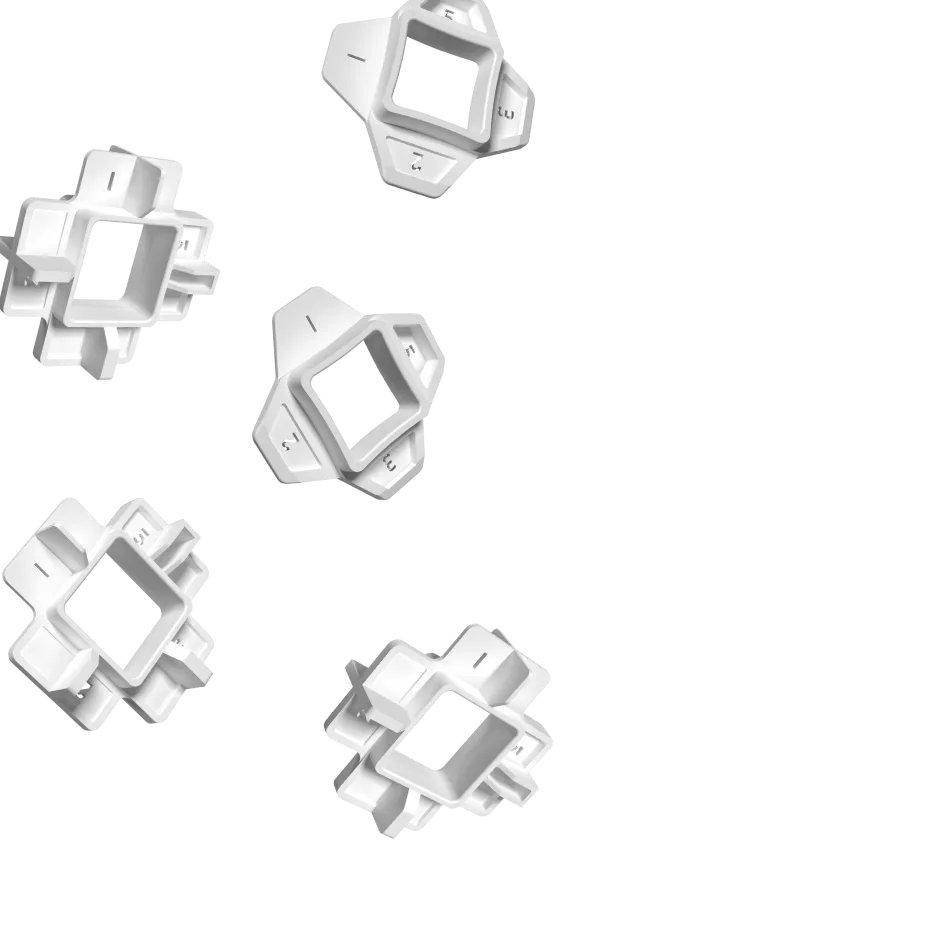
Why Professionals Trust Peygran Spacers
- Multi Series 4X spacers provide consistent spacing for standard cross-joint patterns
- X-style crosses maintain alignment at four-tile intersections precisely
- T-style spacers handle offset patterns and wall tile installations effectively
- Various sizes from 1mm to 10mm accommodate different design requirements
- Durable construction resists compression under tile weight during setting
- Easy removal prevents spacer fragments from contaminating grout joints
- Made in Spain with consistent dimensional accuracy across production batches
Spacer Applications Across Tile Installations
Floor tile installations requiring uniform grout joints throughout large areas
Wall tile work where gravity affects alignment and spacing consistency
Running bond and offset patterns using T-spacers for proper positioning
Grid patterns with cross intersections demanding perfect X-spacing
Large format tiles where small spacing variations become highly visible
Commercial projects with specifications for exact grout line widths
Selecting the Right Spacer Type and Size
For standard grid patterns: X-style crosses maintain four-way intersections accurately
For running bond/brick patterns: T-spacers accommodate offset tile positioning
For 1-2mm minimal joints: Use smaller spacers with rectified tiles only
For 3-5mm standard joints: Most common range for residential installations
For 6-10mm wide joints: Required for rustic tiles and exterior applications
For corners and edges: Adjust spacer placement to maintain consistent visual spacing
For large format tiles: Err toward slightly wider joints to accommodate minor variations
Spacer Usage Errors to Avoid
- Using too-small spacers with non-rectified tiles causes visible spacing inconsistencies
- Leaving spacers in place during grouting creates voids that weaken grout joints
- Mixing spacer sizes within one installation produces uneven grout line appearance
- Forgetting spacers at edges results in inconsistent perimeter grout widths
- Using damaged or compressed spacers from previous projects affects accuracy
Peygran Spacer Quality
Size Range
1mm to 10mm
Types Available
X, T, and 4X
Manufacturing
Made in Spain
Dimensional Accuracy
Consistent batches
Material
Durable polymers
Removal
Clean extraction
Frequently Asked Questions
X-crosses (or plus-shaped spacers) sit at the intersection of four tiles in a standard grid pattern, maintaining equal spacing in all four directions. T-spacers work where three tiles meet, which occurs in running bond, brick patterns, and at walls where offset rows terminate. Most installations need both types - X-crosses for field intersections and T-spacers for offset patterns and perimeter work.
Rectified tiles with precisely cut edges can use 1-2mm spacers for minimal grout lines. Standard ceramic and porcelain typically use 3mm spacers. Natural stone and handmade tiles need 4-5mm to accommodate variations. Exterior installations and rustic tiles often require 6-10mm spacing for proper grout performance and visual proportion. When uncertain, slightly wider spacing is safer than too narrow.
Yes, always remove spacers before grouting. Spacers left in place create voids where grout cannot fully fill the joint, weakening the installation and potentially allowing water infiltration. Remove spacers once adhesive has set enough to maintain tile position but before it fully cures. Clean any adhesive from joint edges during spacer removal for best grout adhesion.
Spacer quantity depends on tile size and pattern. For 300x300mm tiles in grid pattern, plan approximately 11 X-spacers per square meter at intersections. Larger tiles need fewer spacers. Running bond patterns require more T-spacers due to offset intersections. We recommend purchasing 10-15% extra to account for breakage and pattern variations without running short mid-project.
Technically possible but not recommended for professional work. Used spacers may have compressed slightly or absorbed adhesive residue that affects their accuracy. The cost savings from reusing spacers is minimal compared to the risk of inconsistent spacing. For jobs where quality matters, fresh spacers ensure consistent dimensions throughout. Save used spacers for mockups or non-critical applications if desired.
Multi Series 4X spacers feature a cross design with extended arms that position them further from the tile intersection point. This design makes removal easier since the arms extend beyond the grout joint area. They function like standard X-crosses for spacing but offer improved handling during removal. The 4X designation refers to their four-directional spacing capability with enhanced grip points.
At walls, use T-spacers positioned with the stem against the wall and crossbar maintaining spacing to adjacent tiles. At inside corners, standard spacers may not fit - use the spacer flat against one wall while maintaining consistent distance from the perpendicular surface. Some installers cut spacers for corner applications. The goal is maintaining visually consistent spacing at perimeter areas.
We stock Peygran spacers across the common size range including 1mm, 2mm, 3mm, 4mm, and 5mm in X-cross and T-spacer configurations. Larger sizes for special applications are available on request. Our team helps estimate quantities based on tile size and area coverage. Contact us for project-specific recommendations and bulk pricing across Dubai, Abu Dhabi, and Sharjah.
The Foundation of Professional Spacing
Grout lines might seem like a minor detail, but inconsistent spacing immediately identifies amateur tile work. Peygran spacers provide the foundation for professional installations where every grout line runs parallel and every intersection aligns perfectly. Spanish manufacturing ensures dimensional consistency that contractors depend on - spacers that measure exactly what they claim, project after project, box after box.
Multi Series 4X Innovation
Standard cross spacers work but can be difficult to remove when wedged tightly at tile intersections. The Multi Series 4X design extends spacer arms beyond the immediate joint area, providing grip points that remain accessible even after tiles settle into adhesive. This simple design improvement speeds the removal process that occurs thousands of times on large installations. Better access means faster workflow without compromising spacing accuracy.
Precision Across the Size Range
Peygran manufactures spacers from 1mm for minimal-joint rectified tile installations through 10mm for rustic tiles and exterior applications. Each size maintains the same dimensional accuracy regardless of width. This consistency matters because visual perception amplifies spacing errors - a 0.5mm variation in a 2mm joint is highly visible while the same variation in a 10mm joint goes unnoticed. Peygran engineering accounts for these perceptual realities.
X-Crosses for Grid Patterns
The classic tile grid creates four-way intersections throughout the installation where X-style cross spacers maintain equal spacing in all directions. Peygran X-crosses feature sturdy construction that resists compression when heavy tiles settle during adhesive cure. The cross shape positions naturally at intersections and remains stable as surrounding tiles are placed. Simple geometry executed with quality materials produces consistent results.
T-Spacers for Offset Patterns
Running bond, brick patterns, and one-third offset layouts create three-way intersections where T-spacers maintain proper positioning. The vertical stem of the T rests against the continuous grout line while the horizontal crossbar spaces the offset tile. Using the correct spacer type for each pattern ensures consistent results - X-crosses at four-way intersections, T-spacers at three-way junctions.
Material Quality for Reliable Performance
Cheap spacers compress under tile weight, producing narrower joints than intended. Peygran uses polymer formulations that maintain dimensions under the loads tile installations impose. The material also resists adhesive bonding, allowing clean removal without fragments remaining in joints. These material properties might seem minor until you experience the frustration of inconsistent or stuck spacers from inferior products.
Professional Availability in the UAE
Lapiz Blue stocks Peygran spacers for immediate project needs across the Emirates. We understand that running out of spacers mid-installation disrupts workflow and quality, so we maintain inventory of popular sizes for quick replenishment. Our team helps estimate quantities for project planning and provides bulk pricing for large installations. For professional tile spacing backed by local availability, we supply what UAE contractors require.
Maintain Perfect Spacing Across Every Installation
Spanish-made precision spacers for professional grout lines
What we offer:
- Multi Series 4X spacers for easy-removal cross spacing
- X-style crosses for standard grid pattern intersections
- T-spacers for running bond and offset patterns
- Multiple sizes from 1mm to 10mm joint widths
- Bulk quantities for large project requirements
- Consistent dimensional accuracy batch to batch
- Clean removal design for efficient workflow